


Tag: hydrogen trucks

Australia’s road freight sector is struggling to decarbonise, despite a potential $36 billion opportunity in low-carbon liquid fuels, with regulatory fragmentation and infrastructure gaps hampering progress toward the nation’s 2050 net-zero target. Heavy trucks currently account for nearly 40 per cent of transport-related greenhouse gas emissions and around seven per cent of Australia’s total emissions Continue reading Australian truck fleet struggles to decarbonise

Rheinmetall, known by most as a defence contractor and automotive component manufacturer, is making a name for itself for advancements in thermal management of electric and hydrogen powertrains.  The German company recently secured a major deal with a global truck manufacturer worth millions of Euros for several hundred thousand of its hi-tech CWA 2000 electric Continue reading Somebody has placed a huge order for electric truck thermal management
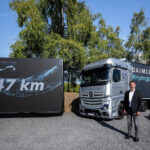
Daimler Truck head of truck technology Andreas Gorbach

Mercedes-Benz has been making headlines recently. First, its GenH2 prototype – approved for public road use – completed the #HydrogenRecordRun, where it covered 1047km using just one fill of liquid hydrogen. Soon after, an eActros 600 prototype took the spotlight, travelling over 1000km with only a single intermediate charge. Daimler has since confirmed that the Continue reading Mercedes-Benz pushes the range envelope with hydrogen and electric trucks

Australia is taking a step towards a greener future with the recent agreement between ReNu Energy subsidiary Countrywide Hydrogen and the Walkinshaw Automotive Group. Continue reading Walkinshaw partners with Countrywide Hydrogen  plans for fuel cell truck conversion and production

A recent swathe of activity within the automotive industry suggests that hydrogen, as an energy source, is becoming more widely accepted as an addition to support battery electric vehicles (BEVs) and meet forthcoming emissions targets.  Following a period of fence-sitting on – and even abandoning – hydrogen projects, established manufacturers are now collaborating to develop Continue reading Hydrogen-fuelled transport back on the agenda

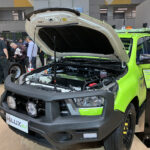
Sea Electric/MEVCO HiLux EV

This year’s Brisbane Truck Show featured record numbers of electric, hydrogen and hybrid commercial vehicles on display, from utes to road trains and everything in between. It was also the largest transport industry event in the Southern Hemisphere with more than 40,000 visitors during the four-day extravaganza, including a strong showing from overseas executives representing Continue reading Brisbane Truck Show uncovers huge clean transport shift, from utes to road trains

The Brisbane Truck Show 2023 (BTS23) is almost upon us, from May 18-21 we can expect some exciting reveals that should interest VASA members. Among the exhibits will be Carrier’s new carbonless cooling system, HDrive’s autonomous yard truck and the Australian debut of the eActros, the first all-electric truck from Mercedes-Benz. The next VASA SightGlass Continue reading Brisbane Truck Show 2023 reveals well worth checking out

After a tough 2021 due to multiple COVID restrictions, 2023 promises to be business as usual at the Brisbane Truck Show (BTS). Longstanding exhibitors are eager to return and showcase their new developments at the Brisbane Convention and Exhibition Centre from Thursday 18th until Sunday 21st of May. Plenty of manufacturers, driven by record demand, Continue reading Electrifying 2023 Brisbane Truck Show line-up looms

Sydney-based electric and hydrogen truck and bus importer Foton Mobility Distribution will partner with TAFE NSW, TAFE Queensland, South West TAFE (Victoria), Federation University, Deakin University (Victoria) TAS TAFE, TAFE SA, South Metropolitan TAFE WA, MTA NSW and MTAQ to develop training programs and accreditations to meet changing transport industry needs during the transport to Continue reading EV, hydrogen truck & bus training move

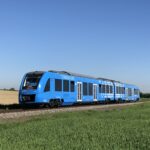
In the European Union, according to train manufacturer Alstom, 46 per cent of mainline train tracks aren’t electrified.  As a result, many networks depend on diesel trains that can work on both electrified and non-electrified tracks. While diesel trains are often considered environmentally friendly, if you compare their emissions per passenger kilometre to alternatives such Continue reading Decarbonising non-electrified railways with hydrogen trains