

SightGlass

Australia’s road freight industry is moving closer to low-emissions transport following the release of the HVIA Guideline for On-road Trials of Powered Trailers, enabling on-road trials of powered trailer technology. Developed by Heavy Vehicle Industry Australia (HVIA), the guideline sets out a clear framework to help manufacturers, fleet operators, regulators and road managers trial trailers Continue reading New Australian guideline paves way for powered trailer trials in road freight

Fluorinated refrigerants including R-1234yf should be carved out of the European Union’s proposed universal PFAS restriction and instead regulated under the existing F-gas Regulation, according to a major study commissioned by the European Parliament’s Committee on Industry, Research and Energy (ITRE). The report, which examined how per- and polyfluoroalkyl substances support EU industrial competitiveness, concluded Continue reading Proposed stay of execution for refrigerant in PFAS ban

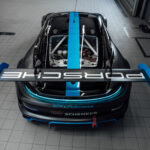
Porsche’s upcoming Cayenne Electric large SUV is a technical showcase of what can be achieved when rapid advances in battery engineering and thermal management – critical to unlocking longer range, faster charging and greater longevity – are throughtfully integrated and precisely controlled by software. Going much further than electrifying a well-known SUV, the Cayenne Electric Continue reading Cayenne you believe it: Porsche goes all-out on EV thermal management

Carrier Transicold eCool-Drive power converter

Temperature controlled logistics is changing rapidly, with energy-efficient technologies being developed and adopted in Australia and beyond, helping to reduce emissions, cut waste and control costs, shaping the future of refrigerated transport as we know it. Tesco expands dual-refrigerant HC/CO2 fleet British supermarket giant Tesco, which is aiming for carbon neutrality across its operations by Continue reading Green refrigeration tech is transforming the cold chain

Engineers from Monash University have made a breakthrough that could enable zinc-air battery technology to move beyond small devices and into large-scale, high-power applications such as electric vehicles and grid storage. The new catalyst design promises increased power, longer battery life and lower costs, using materials that are abundant and safe. Zinc-air batteries work by Continue reading Monash Uni on the brink of zinc-air battery technology breakthrough

Professor Richard Robson has been awarded the 2025 Nobel Prize in Chemistry alongside Professor Susumu Kitagawa (Japan) and Professor Omar M. Yaghi (United States)

Australia-based chemist Professor Richard Robson has been awarded the 2025 Nobel Prize in Chemistry alongside Professor Susumu Kitagawa (Japan) and Professor Omar M. Yaghi (United States) for their pioneering development of metal–organic frameworks, which could help address tough environmental challenges such as refrigerant reclamation. Metal–organic frameworks (MOFs) are described as porous materials made from metal Continue reading Refrigerant reclamation among applications for Nobel Prize-winning tech

As part of broader efforts to address climate change, the District of Columbia Sustainable Energy Utility (DCSEU) has partnered with one of the largest certified refrigerant reclaimers in the United States to launch the nation’s first utility-led refrigerant recovery and reclamation (RR&R) pilot. In addition to cutting harmful synthetic greenhouse gas emissions, the pilot provides Continue reading Refrigerant recovery pilot in Washington DC

Automotive thermal management company Hanon Systems has has manufactured its millionth electric R744 (carbon dioxide) compressor for EVs. The R744 compressors, which have been in high-volume production at the company’s Palmela plant in Portugal since 2019, are at the core of energy-efficient heating and cooling systems used in modern electric cars. Continue reading A million R744 EV heat pumps!

The Austrian Federal Railways (ÖBB) is advancing its shift to more sustainable rail transport with the rollout of new battery-electric trains featuring propane-based climate control systems. Liebherr-Transportation Systems has been commissioned to supply the (HVAC) systems, using technology the company developed with R290 hydrocarbon refrigerant. Each train will be equipped with three saloon HVAC units Continue reading Hydrocarbon refrigerant for Austria’s new trains